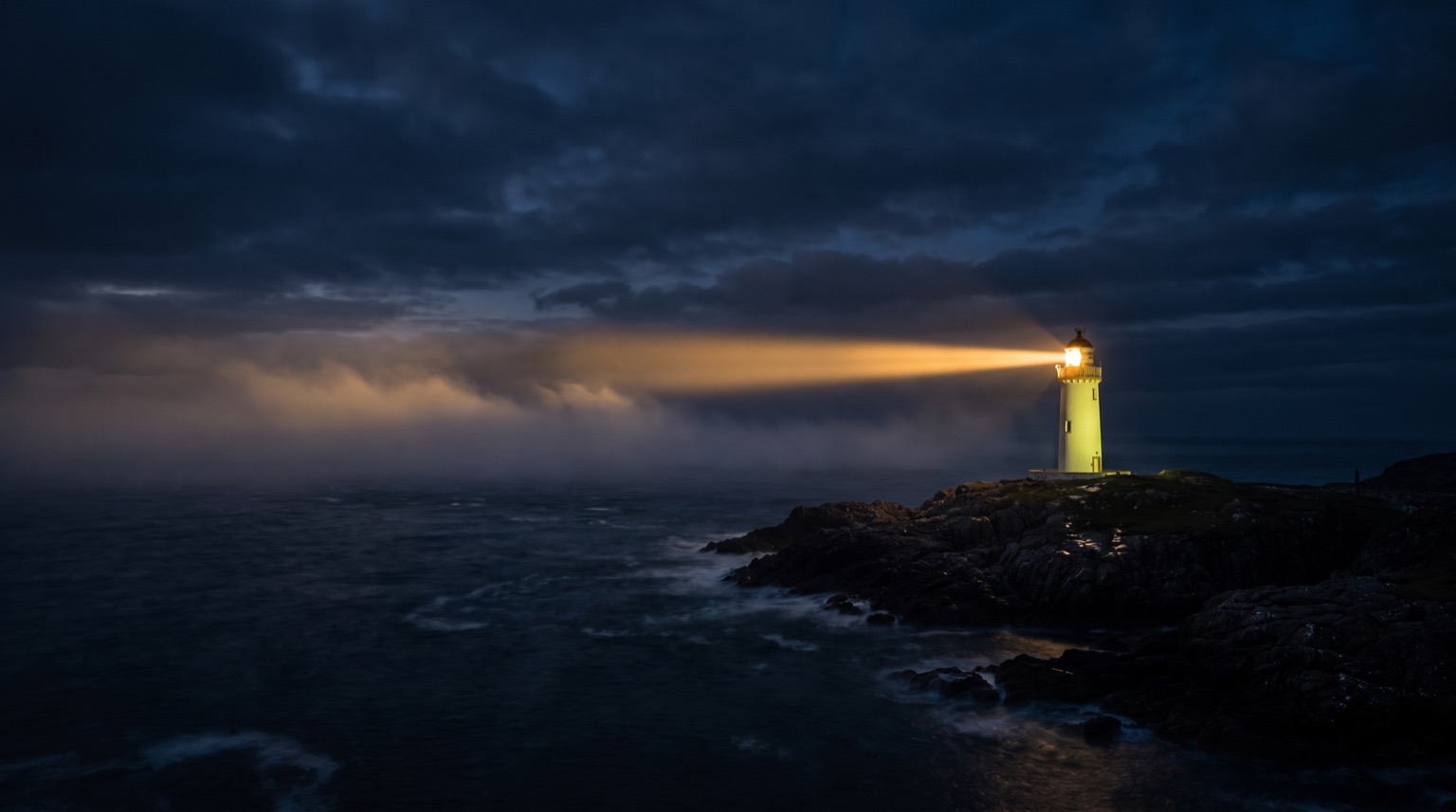
You sleep in the house of a light that no longer needs anyone.
It still flashes twice every twenty seconds, and in the west bedroom it still crosses the ceiling. Rubha na Fàire, Wester Ross: manned for a hundred and thirty-one years, and let by the week since.
Fl(2) W 20s · 39 m · 24 MEstablished 1857 · automated 1988Sleeps four · eleven miles of single track
A 4126Rubha na Fàire57°52′.4 N 5°48′.7 WFl(2) W 20s39 m24 MAdmiralty List of Lights — the character
A ship does not recognise this light. It counts it.
Every light in the world is given a rhythm nobody else nearby is allowed to have. Ours is two flashes every twenty seconds. That sequence, not the colour or the brightness or the position, is how anyone at sea knows which light they are looking at.
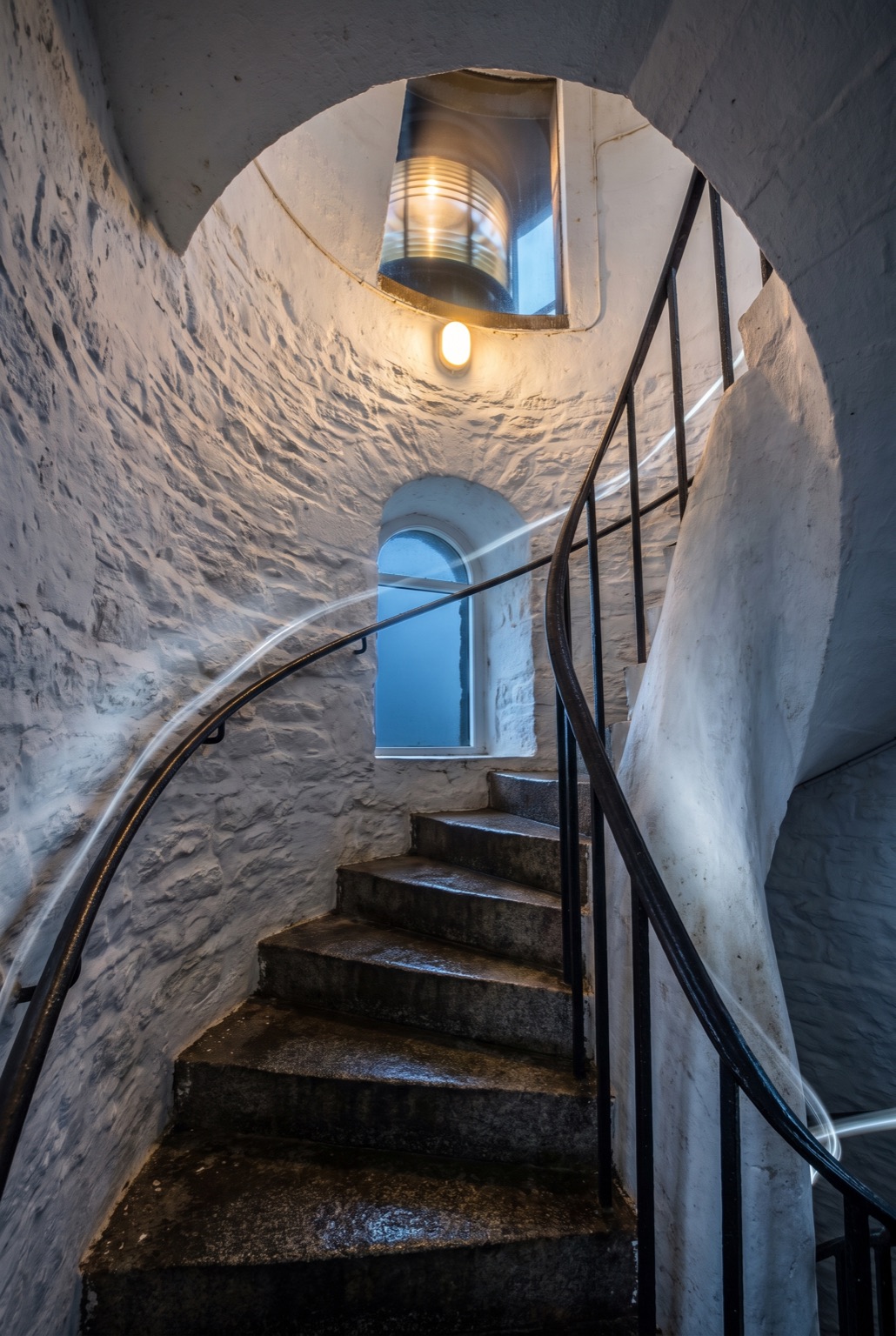
A 4126Rubha na Fàire57°52′.4 N 5°48′.7 WFl(2) W 20s39 m24 MThirty-nine metres, and ninety-six steps to them
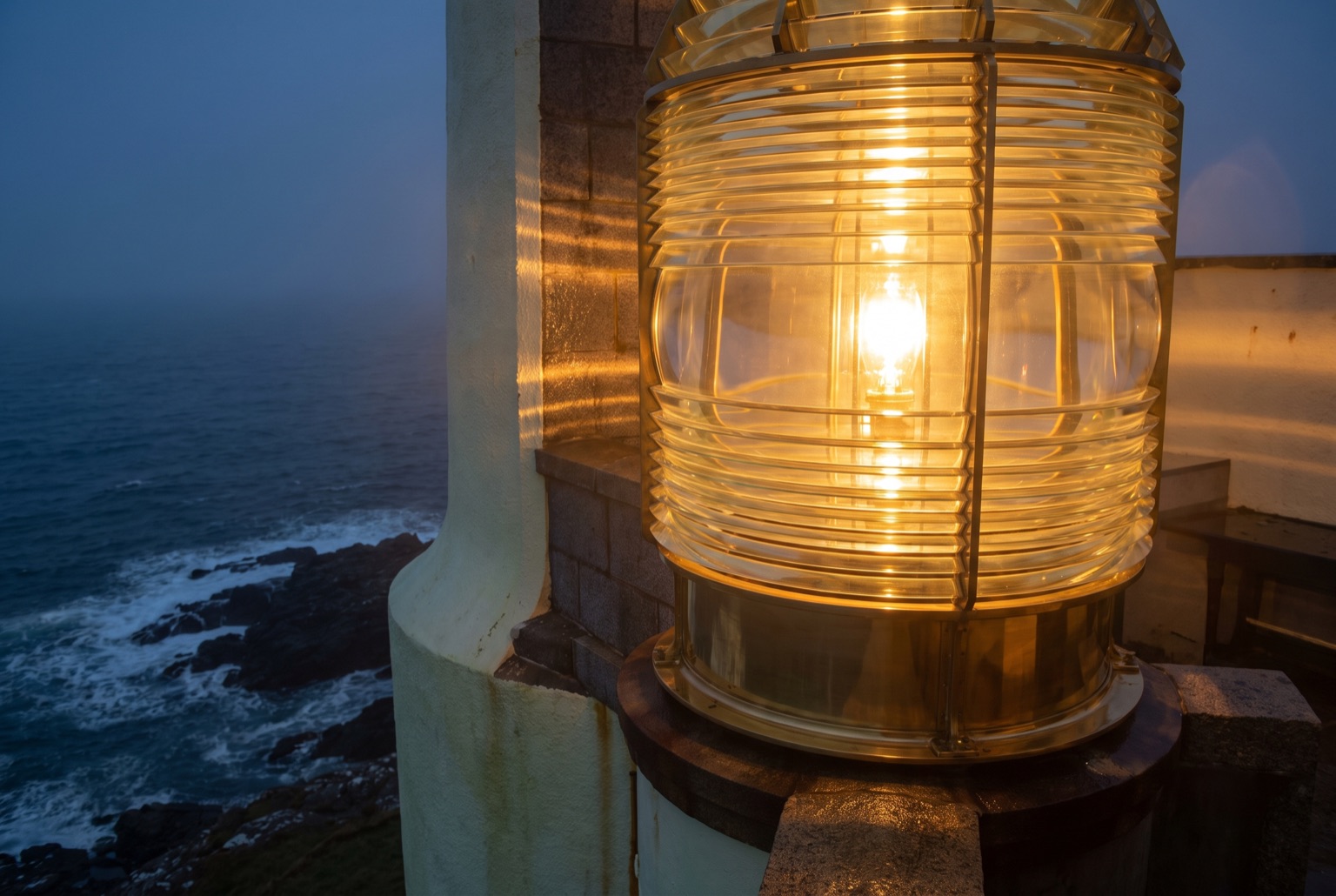
The machine that makes the rhythm.
The lamp does not blink. It burns steadily and the glass goes round it, and everything else in the tower exists to keep that turning, keep it clean, and keep it alight. Nine points into it.
A 4126Rubha na Fàire57°52′.4 N 5°48′.7 WFl(2) W 20s39 m24 MThe house is part of the station, and always was
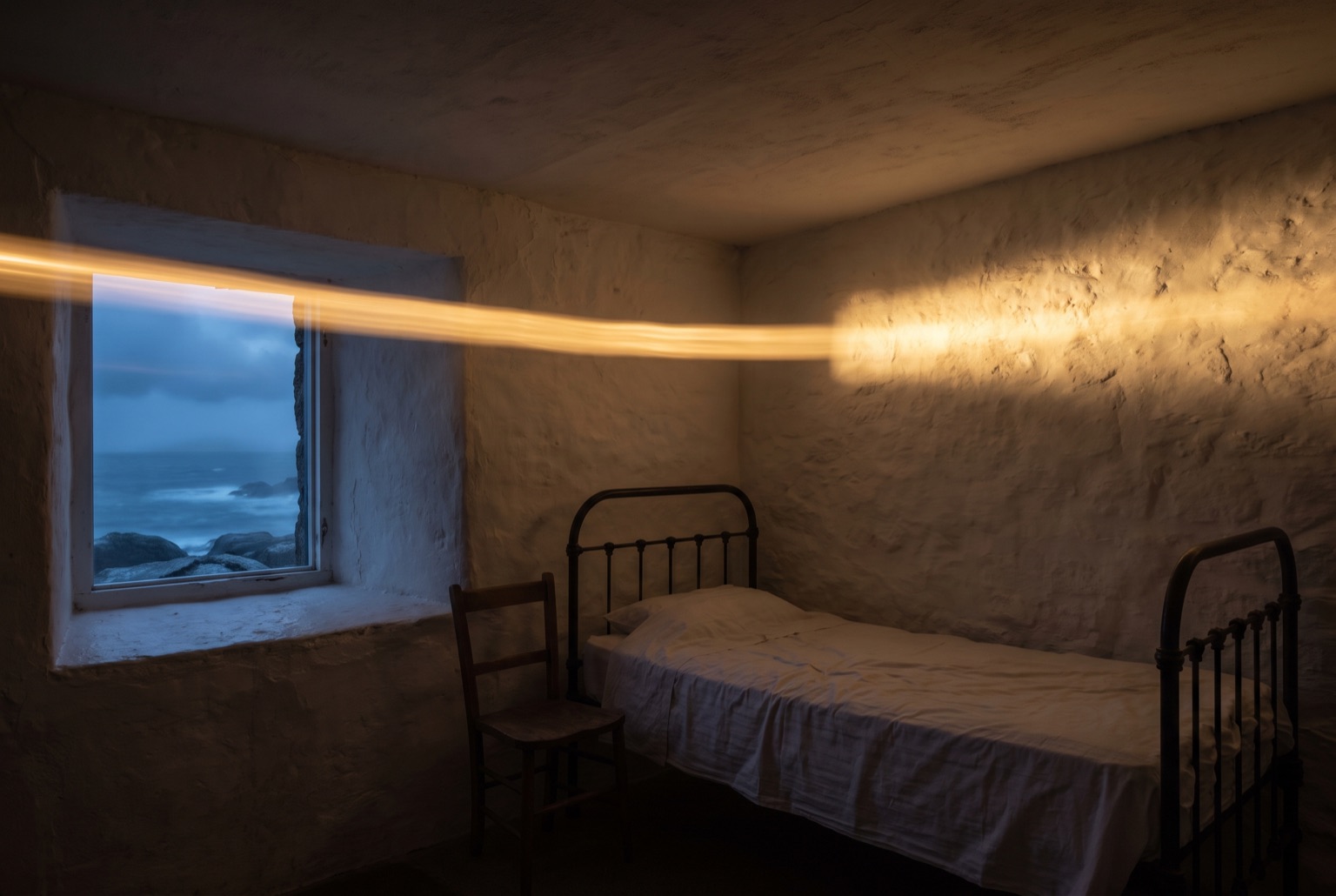
There are no curtains in the west bedroom.
We will not be fitting any. Every twenty seconds a band of light crosses the ceiling from the window to the door, and it is the reason to come.
The principal keeper's house: two bedrooms, a sitting room facing the tower, a kitchen with the original solid-fuel range, and a store that still smells of paraffin a hundred years after the last drum left it. Walls six hundred millimetres thick. Sleeps four.
Most people take two nights to stop noticing the light and then miss it when they go home. That is the most consistent thing anyone says in the book by the door.
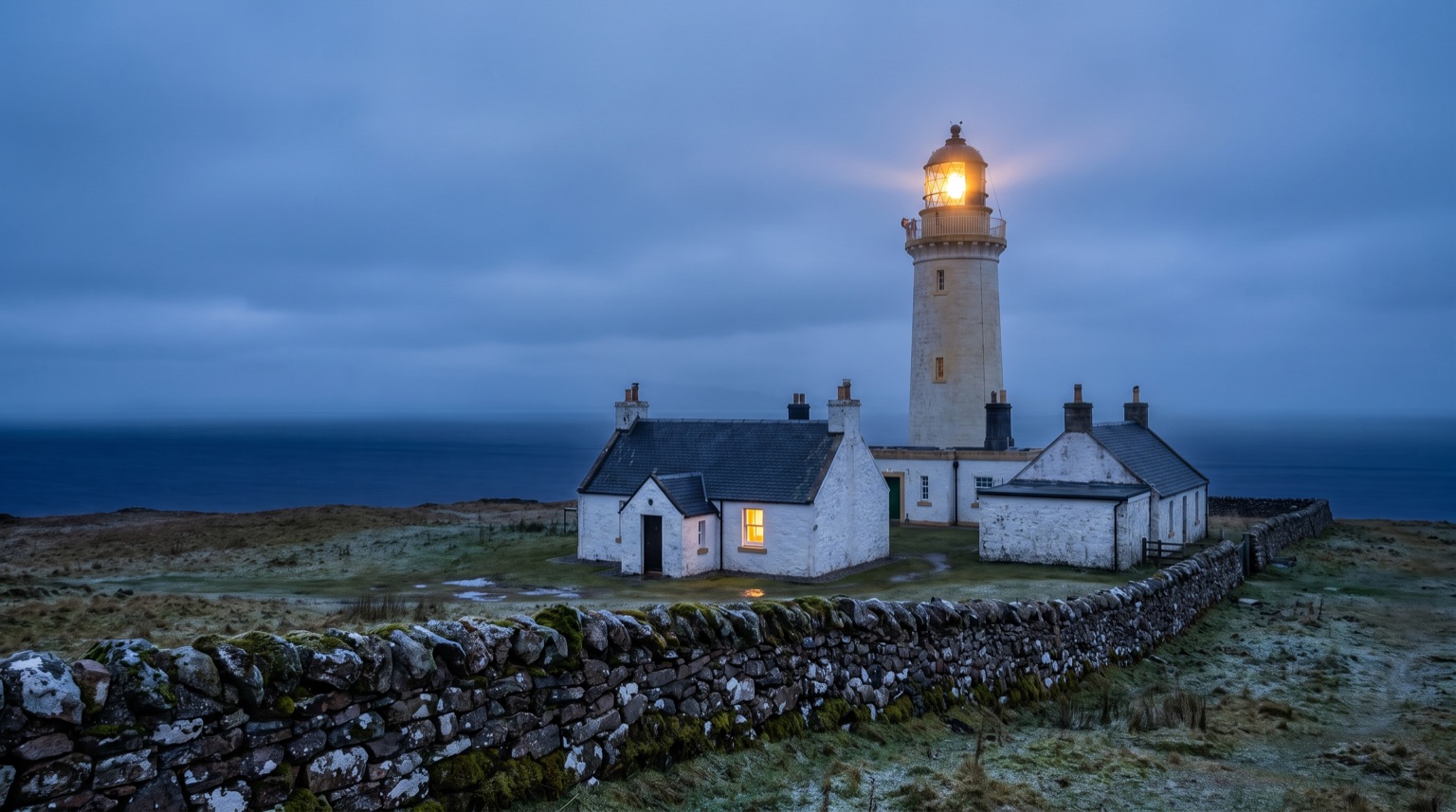
A 4126Rubha na Fàire57°52′.4 N 5°48′.7 WFl(2) W 20s39 m24 MManned 1857 – 1988 · one hundred and thirty-one years
Somebody was awake here every night for a hundred and thirty-one years.
Then on the fourth of October 1988, at ten past three in the afternoon, nobody had to be. The light did not change. That is the whole of what changed.
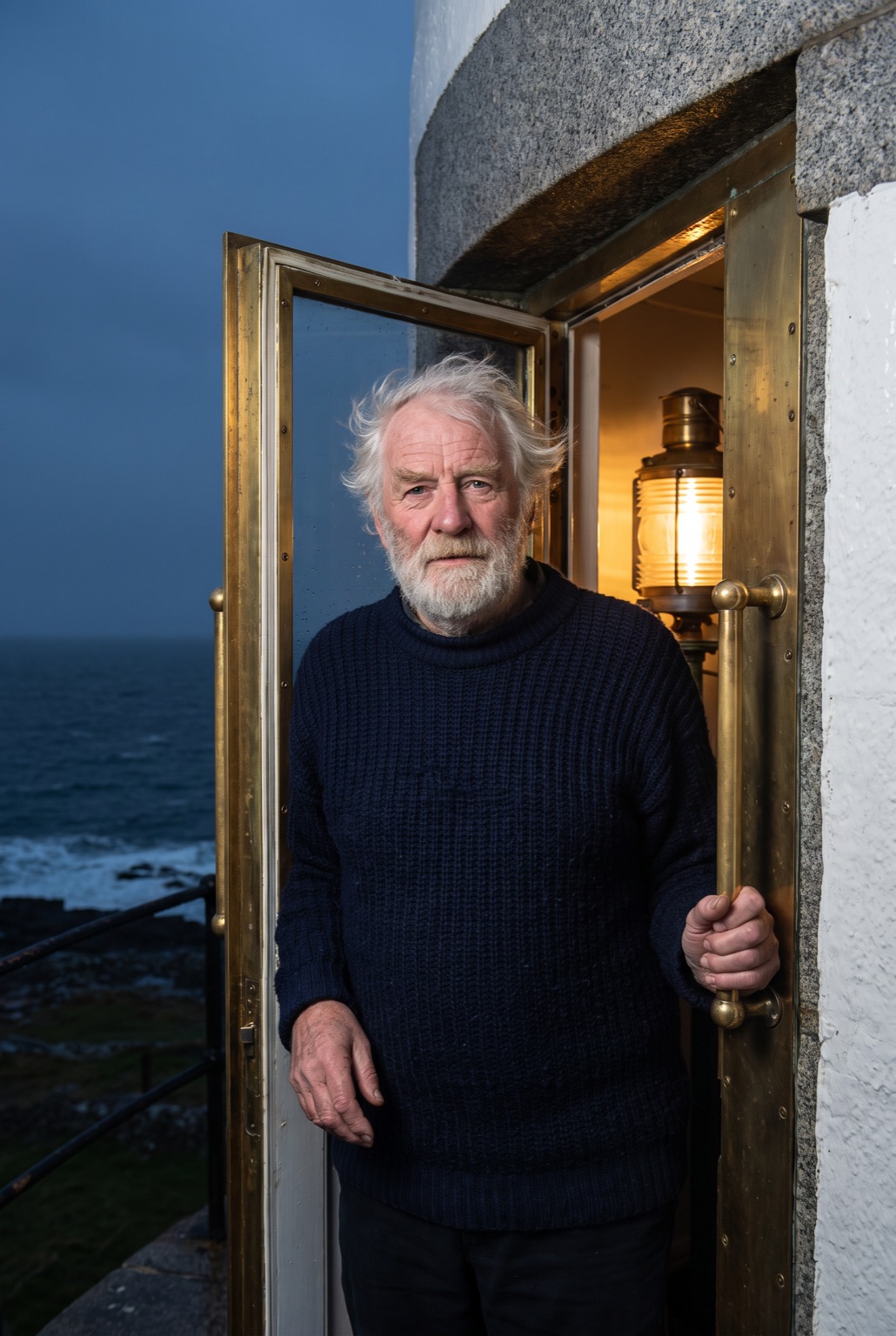
Iain MacAulay
The last principal keeper
Came to the station in 1971 and kept the watch until the fourth of October 1988. Lives eleven miles away and has never once asked to come back up the tower.
“It wasn’t the dark you noticed. It was that something had to be done every half hour, all night, for a hundred and thirty-one years, and then on a Tuesday afternoon it didn’t.”
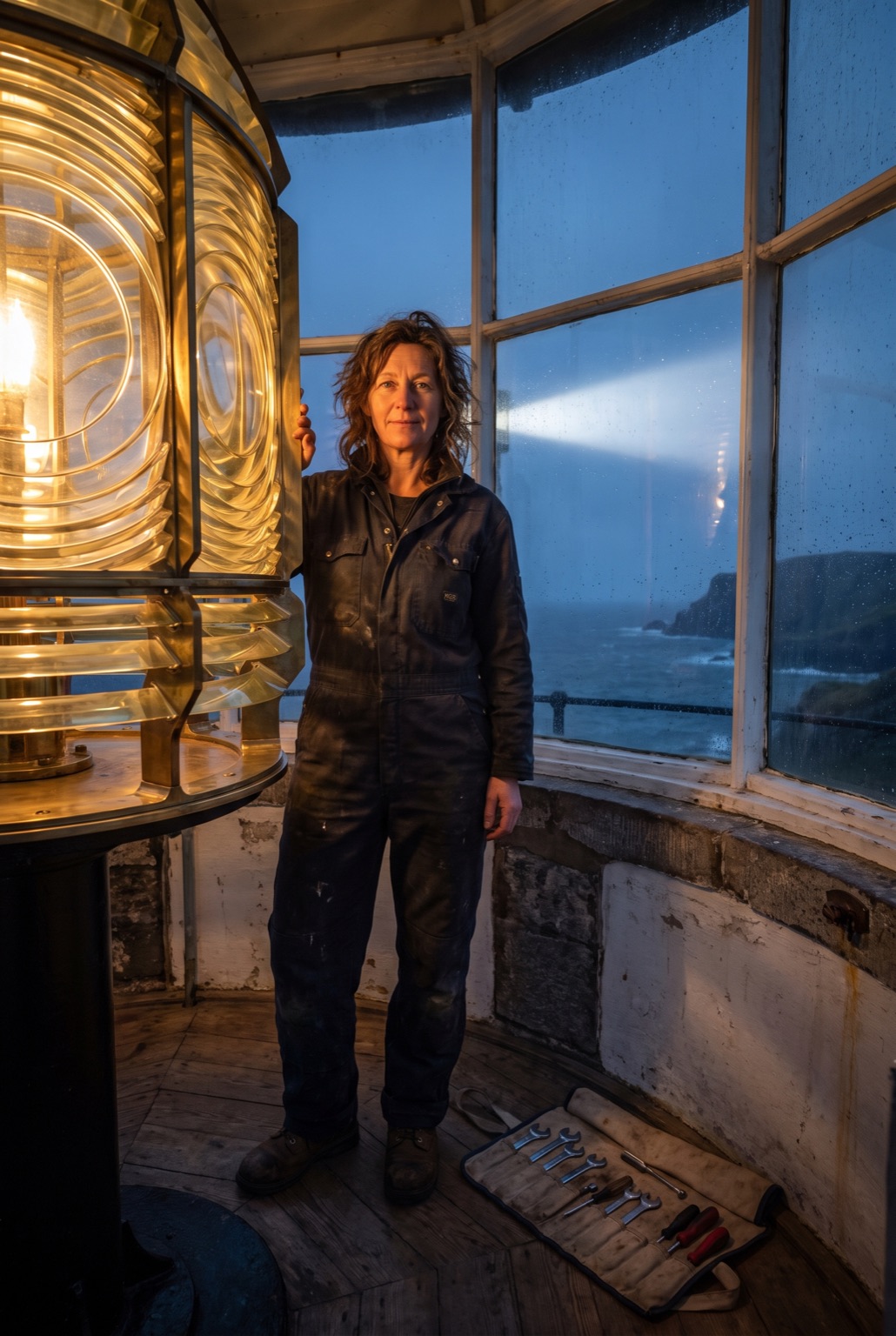
Mòrag NicLeòid
Attendant
Services the light four times a year: lamp changer, charge controller, seals, and the outside of the panes. Twenty-one stations on her round, from Ardnamurchan to the Summer Isles.
“People think it’s romantic. It’s a bulb, a battery and a lot of salt. But if I get it wrong somebody finds out about it at two in the morning in a Force 8.”
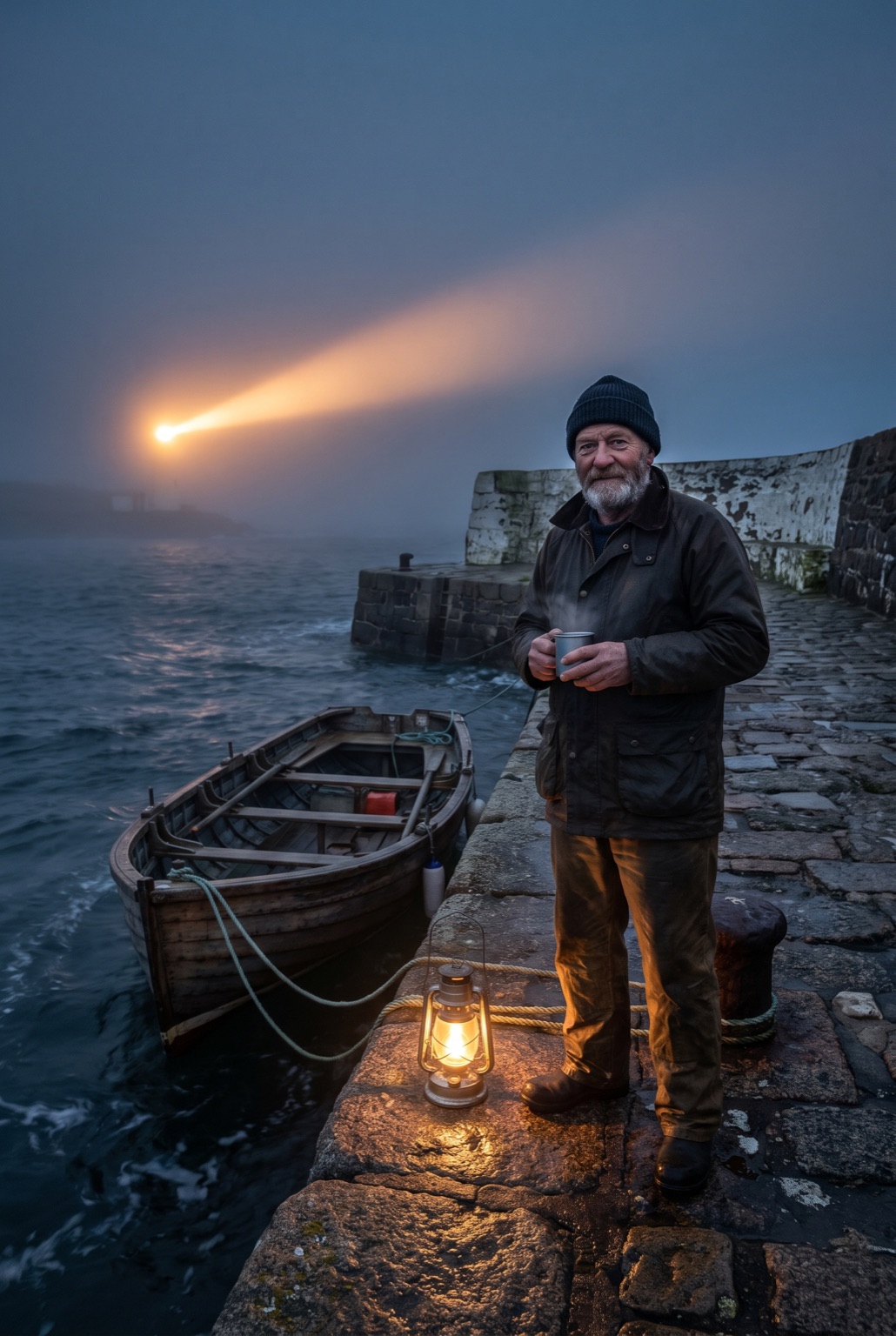
Dòmhnall Grant
Boat
Brings guests, coal, gas and everything else in from the village when the track is out, which is about nine weeks a year. Forty minutes each way, and he will not go in a southwesterly over 6.
“If I say no, it’s no. I’ve had folk offer me two hundred pound to try it and the answer is still no.”
A 4126Rubha na Fàire57°52′.4 N 5°48′.7 WFl(2) W 20s39 m24 MThe position you will be driving to
Taking the week.
Saturday to Saturday. We will write back with what the track is doing and whether you need Dòmhnall, and that reply is worth waiting for before you book anything else.